

 Jul 29, 2026
Home-Based ABA Therapy in St. Louis: Is It Right for Your Family?
Choosing the right therapy setting can feel confusing when your child needs support with communication, behavior, routines, or daily living skills. Some families want the structure of a therapy center, while others prefer care in the comfort of home.
For many parents searching for home ABA therapy in St. Louis, in-home care can be a helpful option because it allows children to practice important skills where daily life already happens.
This guide explains how home-based ABA works, how it compares with center-based therapy, and what St. Louis families should consider before scheduling an assessment.
Understanding Home-Based ABA Therapy
Home-based ABA therapy brings Applied Behavior Analysis support into the child’s natural environment. Instead of learning skills only in a clinical room, the child practices them during regular home routines. This may include getting dressed, brushing teeth, eating meals, playing with siblings, moving between activities, or preparing for school.
Home-based therapy can also feel more comfortable for children who learn best in familiar spaces. However, it still follows a structured plan. A session is not random play or casual babysitting. It includes specific goals, guided practice, progress tracking, and ongoing support.
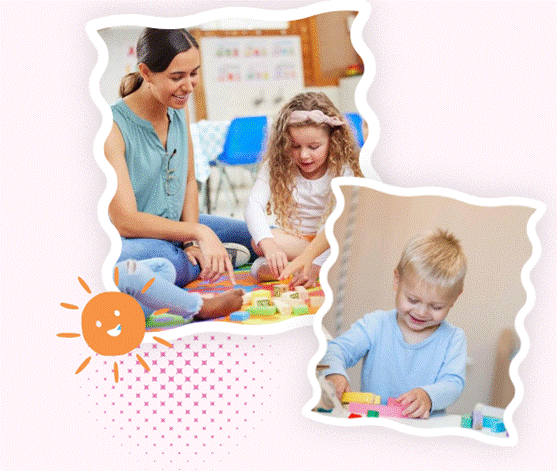
Home ABA vs. Center-Based Therapy: Pros and Cons
Both home-based and center-based ABA therapy can help children with autism. The right choice depends on your child’s needs, family schedule, comfort level, and therapy goals. Some children benefit from learning at home, while others may do well in a structured center setting.
| Home-Based ABA | Supports real routines, includes family, and helps with daily living skills | May offer fewer peer interaction opportunities at home |
| Center-Based ABA | Provides structure, planned activities, and peer practice | Skills may need extra practice at home |
| Combined Support | Can balance real-life learning and structured practice | Availability depends on service options |
Home-based ABA may be a strong fit when your child’s biggest struggles happen during everyday routines. Center-based therapy may be helpful when a child needs more peer interaction or a controlled learning space. Some families may also benefit from a blend of both when available.
What a Home Therapy Session Actually Looks Like
Every child’s plan is individualized after assessment, so session activities, goals, and caregiver involvement may look different from one family to another.
A session may include:
- Practicing requests during snack time
- Teaching turn-taking during play
- Supporting transitions between activities
- Helping with dressing or hygiene steps
- Teaching a child to ask for help or a break
The goal is not to make the home feel like a classroom. The goal is to use normal daily moments as learning opportunities.
Involving Siblings in Therapy
Siblings can play an important role in home-based ABA therapy. They are part of the child’s everyday life, so including them carefully can support real progress. This does not mean siblings become responsible for therapy. It simply means they may join simple, guided activities when appropriate.
For example, siblings may help practice:
- Taking turns with toys
- Waiting during a game
- Sharing space during play
- Using greetings or simple responses
Therapists should always consider the comfort of every child in the home. Sibling involvement should feel supportive, not forced.
Using Daily Routines to Build Real Skills
One strong benefit of home ABA therapy in St. Louis is that therapy can happen during routines families already manage every day. These routines often show where a child needs the most help.
For example, a child may resist getting dressed each morning. A therapist can break the routine into smaller steps. First, the child may choose between two shirts. Then, the child may practice putting one arm through a sleeve. Over time, the therapist can reduce support as the child becomes more confident.
Daily routines may include:
- Morning preparation
- Mealtime behavior
- Hygiene tasks
- Bedtime transitions
- Homework routines
- Cleaning up toys
Parent Training and Family Support
Parents are an important part of successful home-based ABA. A child spends more time with family than with therapists, so consistency matters. Parent training gives caregivers practical tools they can use during daily life.
A therapist or supervisor may help parents learn how to:
- Give clear instructions
- Offer choices
- Use visual schedules
- Respond calmly during hard moments
- Praise progress in helpful ways
When parents feel included, therapy becomes more consistent. The child receives similar support during and between sessions.
Why St. Louis Families Consider In-Home ABA
St. Louis families may choose in-home ABA because it fits naturally into family life. It can be especially useful when the child’s biggest challenges happen at home, during transitions, or around daily routines.
Families may consider home-based therapy when they want:
- Support in a familiar setting
- Help with real-life routines
- More parent involvement
- Practice with siblings
- Less travel stress
- Goals connected to daily life
SoaringHigh ABA offers in-home ABA therapy in St. Louis, Missouri, with support for communication, social skills, daily living tasks, and positive behavior development. The process includes intake, benefits check, assessment, and therapy implementation.
Is Home-Based ABA Right for Your Child?
Home-based ABA may be a good fit if your child needs support with routines that happen inside the home. It may also help if your family wants direct coaching during everyday situations.
However, every child has different needs. Some children may benefit from center-based support, peer interaction, or school-based help. The best decision usually comes after a careful assessment.
Before choosing, think about:
- Where does your child struggle most?
- What skills does your family want to build?
- How much parent involvement feels manageable?
- Does your child need more peer practice?
- What services are available near your home?
A home assessment can help answer these questions clearly. You can also review the broader ABA therapy services available through the website to understand the types of support offered.
Schedule a Home Assessment
Home-based ABA therapy can help children practice communication, daily living skills, transitions, behavior support, and social interaction in a familiar setting. It can also help parents and siblings become part of the learning process in a natural way.
While center-based therapy offers structure and peer opportunities, home ABA therapy in St. Louis may be a strong fit for families who want support built around everyday routines.
To understand whether this setting is right for your child, schedule a home assessment with SoaringHigh ABA and discuss your family’s goals, needs, and options.
 Jul 29, 2026
ABA Therapy in Denver: How to Tell If Your Child Is Making Real Progress

Choosing ABA therapy for your child is an important decision, but understanding whether it is making a real difference can be just as challenging. Progress is not always dramatic, and every child develops at their own pace. However, parents should expect to see measurable improvements over time. If your child is receiving an ABA therapy […]
Read More
Jul 29, 2026
Choosing an ABA Therapy Provider in Colorado Springs: A Military Family’s Guide
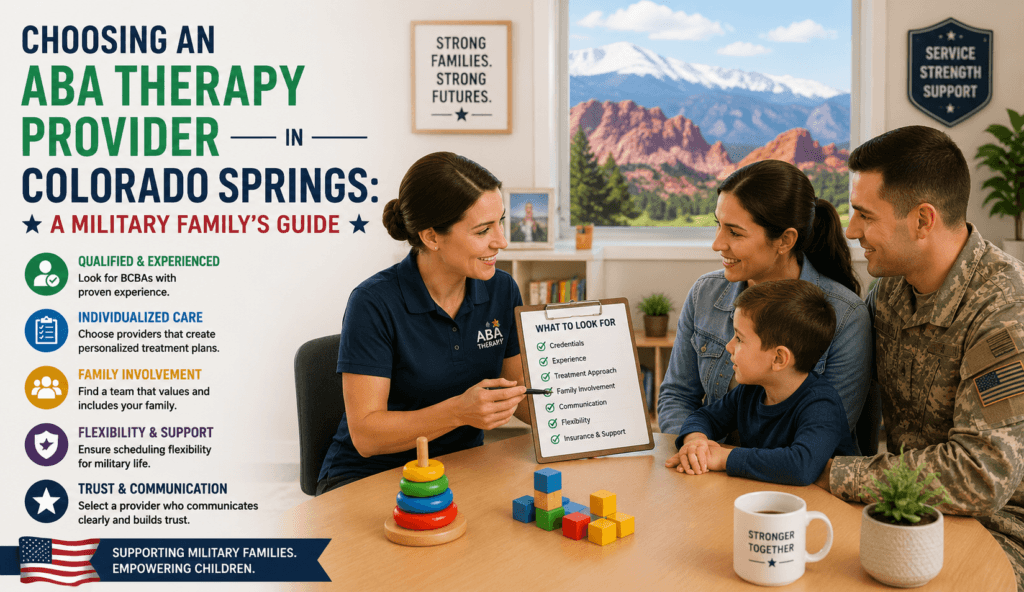
Relocating is part of military life, but moving with a child who has autism often brings additional concerns. Along with settling into a new home, parents must find reliable therapy that supports their child’s progress without unnecessary delays. Choosing the right ABA provider can make that transition much smoother. If you’re looking for ABA therapy […]
Read More
Jul 29, 2026
Applied Behavior Analysis in Kansas City: Breaking Down the Wait-List Problem

For many families, finding ABA services starts with hope and quickly turns into waiting. Parents call providers, fill out forms, check insurance, and then hear the same hard answer: there may be a waitlist. When a child needs help with communication, behavior, routines, or daily living skills, that delay can feel stressful. This guide explains […]
Read More