

 Sep 22, 2026
How ABA Therapy for Children in Kansas City Builds Independence
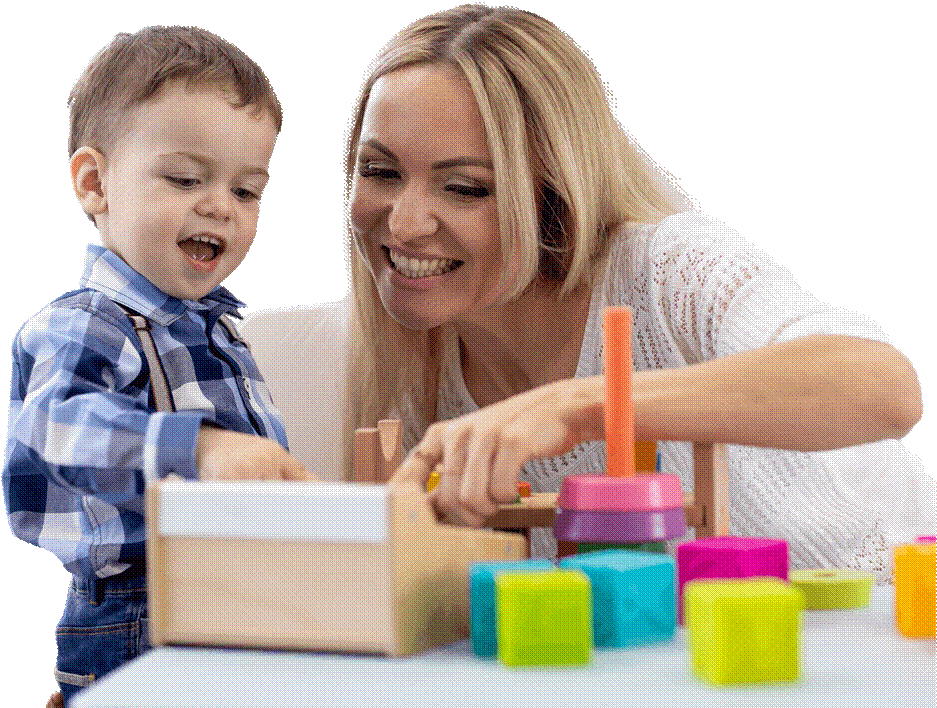
Independence can look different for every child, but it often grows through everyday skills. Learning to communicate needs, follow routines, interact with others, and take part in daily activities can help children become more confident in familiar situations. ABA therapy can support this development by focusing on useful skills that children can practice in their everyday environments.
For families considering ABA therapy for children in Kansas City, an approach centered on communication, independence, social skills, and practical learning can make skill development part of daily life. SoaringHigh ABA provides in-home support designed around each child’s individual needs.
Building Skills That Support Everyday Independence
Independence does not develop from learning one large skill at once. It can grow through smaller steps that help a child participate more actively in everyday activities. ABA therapy can focus on skills that are meaningful to the child and useful within familiar routines.
SoaringHigh ABA’s Kansas City team provides therapy in the home, where children can work on skills in an environment they already know. This setting can help connect therapy with activities that happen during normal family routines.
Important areas of development can include:
- Building communication skills that help children express their needs.
- Developing independence through practical everyday activities.
- Supporting social skills that help children interact with others.
- Practicing skills in environments where children use them naturally.
The goal is to help children develop skills that have meaning beyond an individual therapy session.
Communication Is an Important Part of Independence
Communication plays an important role in helping children participate in daily life. When children develop ways to communicate their needs, they can take a more active role in routines and interactions.
SoaringHigh ABA’s Kansas City team focuses on communication as one part of its approach to helping children develop independence. Therapy takes place in the home, allowing communication skills to be practiced within familiar surroundings.
For example, therapy can focus on helping a child communicate during everyday activities. These skills can then be used naturally as the child interacts with family members and participates in daily routines.
Personalized Plans Support Individual Progress
Every child has different strengths, challenges, and ways of learning. Because of this, an effective approach needs to consider the individual child rather than relying on one standard plan.
At SoaringHigh ABA, BCBAs conduct a thorough assessment before the child begins therapy. The assessment looks at the child’s strengths, challenges, and how they learn best. This information becomes the foundation for a personalized plan.
The process includes several important steps:
| Step | What Happens |
| Initial conversation | The administrative team answers questions and explains the available options. |
| Insurance verification | Insurance paperwork, eligibility checks, and authorizations are handled. |
| Assessment | BCBAs evaluate the child’s strengths, challenges, and learning needs. |
| Therapy begins | The child works with a dedicated RBT who receives ongoing coaching. |
This structured process helps create a plan based on the child’s specific needs. It also gives families a clearer understanding of how therapy will begin and what the care process involves.
In-Home Therapy Connects Learning With Daily Life
The home is where many important daily activities take place. Children communicate with family members, follow routines, and practice different skills throughout the day. Providing therapy in this familiar setting allows learning to connect with real situations.
SoaringHigh ABA provides in-home ABA therapy in Kansas City. The location page explains that familiar surroundings can help skills transfer naturally into daily life.
This approach can support areas such as:
- Communication during regular household activities.
- Independence while participating in familiar routines.
- Social skills practiced within everyday situations.
- Skills that children can use outside individual therapy sessions.
When learning happens in an environment that children already understand, therapy can become closely connected to their normal experiences.
Consistency Can Help Skills Carry Into School
Children use skills across many parts of their day, not only at home. School and daycare can also provide important opportunities to practice communication, independence, and social skills.
SoaringHigh ABA works with a child’s school to help maintain consistent strategies throughout the day. Collaboration can help support continuity between therapy and the environments where children learn and interact.
This support can be useful because children may encounter different routines and expectations during the day. Consistent strategies can help connect the skills being developed during therapy with situations that happen at school or daycare.
Parents Become Partners in the Process
Parents play an important role in a child’s development because they see the child’s everyday experiences firsthand. They understand routines, preferences, challenges, and progress that may not always be visible during a therapy session.
SoaringHigh ABA includes parent training as part of its Kansas City support. Parents receive strategies they can use to reinforce progress when the therapist is not present.
This partnership can help families become more involved in the learning process. Instead of treating therapy as something that happens separately from family life, parent training helps connect strategies with everyday routines.
Family involvement can include:
- Learning strategies that reinforce progress at home.
- Sharing observations about the child’s everyday needs.
- Working with BCBAs on the child’s personalized plan.
- Supporting skills between therapy sessions.
This approach recognizes that parents are important partners in their child’s development.
Consistent Support Can Strengthen the Therapy Experience
Consistency is another important part of the approach described by SoaringHigh ABA. The Kansas City team emphasizes therapists who stay, allowing children and therapists to develop relationships over time.
The location page also explains that BCBAs collaborate with families rather than simply delivering a plan. This allows families to share what they know about their children while participating in the care process.
The approach also emphasizes fewer cases per BCBA, allowing more attention for each child. Together, these elements create a support structure focused on the individual child and their progress.
For families exploring ABA therapy for children in Kansas City, understanding how therapy is delivered can be just as important as understanding which skills are addressed.
Conclusion
Independence develops through skills that children can use in their everyday lives. Communication, social skills, familiar routines, school participation, and community activities can all provide opportunities for meaningful learning. SoaringHigh ABA’s Kansas City approach focuses on supporting these areas within the child’s natural environments, particularly through in-home therapy.
Parent training and collaboration with schools can also help maintain consistency throughout the day. By creating personalized plans based on each child’s strengths, challenges, and learning needs, ABA therapy can support steady skill development that connects therapy with real-world experiences.
 Aug 22, 2026
Why Home ABA Therapy in Colorado Springs Can Benefit Families
Finding the right support for a child with Autism Spectrum Disorder can feel like a major decision for families. ABA therapy can help children develop skills that support communication, social interaction, and daily living. When therapy takes place at home, children can practice these skills in familiar surroundings and daily routines. SoaringHigh ABA provides in […]
Read More
Aug 22, 2026
Understanding ABA Therapy and Its Purpose

Applied Behavior Analysis, commonly called ABA, is an established approach used to support individuals with Autism Spectrum Disorder. The approach focuses on understanding behavior and encouraging useful skills through structured support. ABA therapy can address several areas that influence a child’s daily experiences. These areas include communication, social interaction, learning, and behaviors that may interfere […]
Read More
Aug 22, 2026
A Parent’s Guide to Choosing the Right Missouri ABA Therapy Program

Choosing a Missouri ABA therapy program for your child is an important decision that deserves careful thought. Parents want support that understands their child, respects their strengths, and fits naturally into daily life. The right program should also provide clear goals, family involvement, and support across the places where children learn and grow. In Missouri, […]
Read More