
 Jul 29, 2026
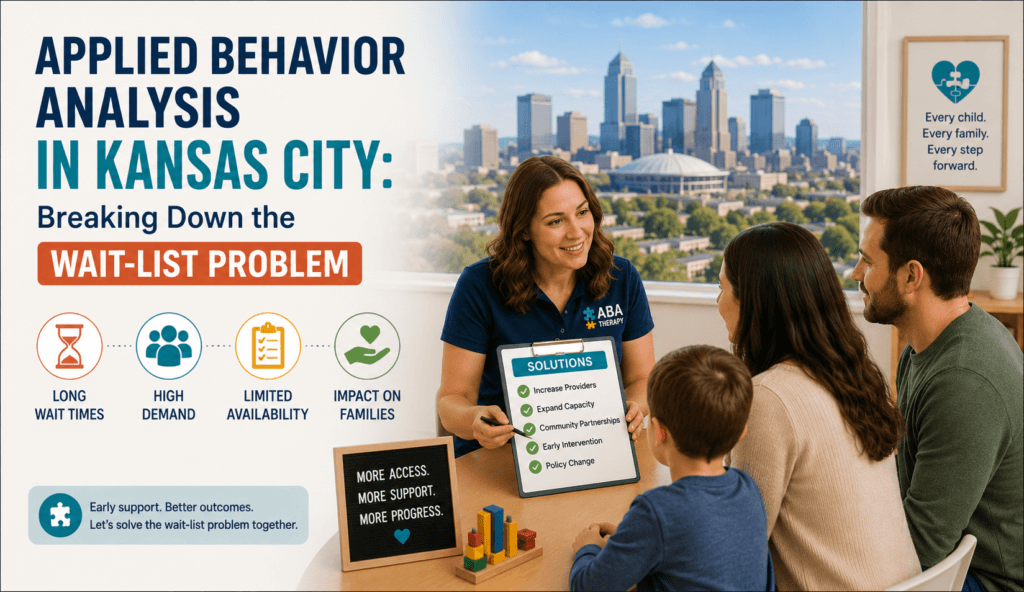
Applied Behavior Analysis in Kansas City: Breaking Down the Wait-List Problem
For many families, finding ABA services starts with hope and quickly turns into waiting. Parents call providers, fill out forms, check insurance, and then hear the same hard answer: there may be a waitlist. When a child needs help with communication, behavior, routines, or daily living skills, that delay can feel stressful.
This guide explains why waitlists happen, how families can move faster, and what to do while waiting. It also explains how to judge quality when searching for applied behavior analysis Kansas City services.
Why ABA Waitlists Are Long Nationwide
ABA waitlists are not usually caused by one simple problem. In many parts of the country, demand has grown faster than provider availability. More families now understand how ABA can support children with autism, so more parents are looking for care earlier.
At the same time, ABA programs need trained professionals. A quality program usually involves a BCBA, RBTs, intake support, insurance checks, assessments, and ongoing supervision. That takes time and staffing.
Common reasons waitlists happen include:
- Shortages of trained ABA professionals in many areas.
- Limited BCBA availability for assessments and supervision.
- Insurance approval steps before therapy begins.
- High demand for in-home or after-school therapy hours.
Why the Problem Can Feel Harder in Kansas City
Kansas City families may encounter the same access challenges many families see when demand for ABA therapy is high and schedules are limited. Parents often want therapy close to home, at school, in daycare, or in familiar community settings. That makes scheduling more complex.
In-home ABA can be helpful because children practice communication, independence, and routines in familiar surroundings. If many families request similar times, openings can fill quickly.
Families searching for applied behavior analysis Kansas City support should understand that a waitlist does not always mean care is unavailable forever. Sometimes a family can begin with intake, insurance verification, assessment, or parent guidance before full therapy hours open.
How to Get on the Fastest Path to Services
The fastest path usually starts with being prepared before the first call. Families should gather basic information so the intake team can move quickly.
Helpful items to prepare include:
- Your child’s diagnosis or evaluation documents, if available
- Insurance details and policy information
- Your child’s main challenges and support needs
- Preferred service times and locations
- School, daycare, or home schedule details
Clear information helps the provider understand your needs sooner. It also reduces back-and-forth communication. If a provider offers an intake form, complete it carefully. Missing details may slow the process.
What to Ask During the First Call
The first call should help you understand both access and quality. A good intake conversation should feel clear, calm, and supportive. Parents should not feel rushed or confused.
Ask simple questions such as:
- How does the intake process work from start to finish?
- Can insurance be verified before assessment?
- Is there a current waitlist for my location or schedule?
- Can my child begin with an assessment or parent support?
- How are BCBAs involved in treatment planning?
- How often are goals reviewed and updated?
What Families Can Do While Waiting
Waiting for ABA services does not mean doing nothing. While families wait, they can start building structure at home. Small, steady routines can help children feel more secure.
Parents can try simple steps such as:
- Using the same words for common instructions.
- Offering two choices instead of open-ended questions.
- Creating a picture routine for mornings or bedtime.
- Praise little progress right away.
- Tracking difficult moments and possible triggers.
These steps do not replace ABA therapy. However, they can help parents notice patterns. They may also give the BCBA useful information during assessment.
A Simple Comparison of Waiting Options
Some families are told to wait for full therapy hours. Others may have earlier options. The table below explains what each step can offer.
| Option While Waiting | What It May Include | Why It Helps |
| Intake call | Basic questions, service needs, next steps | Starts the process early |
| Insurance verification | Coverage check and authorization guidance | Reduces billing confusion |
| Initial assessment | BCBA reviews strengths and challenges | Builds the treatment plan |
| Parent training | Practical strategies for home routines | Supports daily progress |
| Limited openings | Fewer hours before full placement | Helps services begin sooner |
Signs of a Genuine Quality ABA Program
Fast access matters, but quality matters just as much. Parents should look for a program that feels thoughtful, not rushed. ABA should be personal, respectful, and based on each child’s needs.
A quality ABA program usually includes:
- Oversight from a BCBA
- Individualized, data-driven treatment plans
- Clear goals connected to daily life
- Family involvement and parent training
- Ongoing progress tracking
- Regular plan updates when needs change
The best care helps children build communication, independence, safety, social skills, and daily routines in ways that fit real life.
How Soaring High ABA Supports Access in Kansas City
Soaring High ABA provides in-home ABA therapy in Kansas City to help children build skills in a familiar setting. The team supports communication, independence, social skills, and daily progress in the home environment.
The intake process is also designed to feel easier for families. The team talks with parents, verifies insurance, completes an assessment, and then begins care with a dedicated RBT under ongoing support. This structure can reduce confusion during a stressful time.
They also provide school and daycare support, parent training, and community skills. These services matter because children need to use skills across many parts of life, not only during therapy sessions.
Addressing Wait Times Without Overpromising
Families deserve honest information about wait times. Some providers may offer earlier intake steps, insurance verification, parent guidance, or assessment before full therapy hours begin, depending on availability. At this stage, Kansas City wait-time averages and the full intake priority process should be confirmed directly with Soaring High ABA.
When discussing applied behavior analysis Kansas City services, the most helpful approach is clear communication. Parents should know what can begin now, what may take time, and what documents are needed next.
Join the Priority Intake List
Applied Behavior Analysis, Kansas City waitlists can feel discouraging, but families are not powerless. Parents can move faster by preparing documents, asking the right questions, and starting intake as early as possible. They can also use the waiting period to build simple routines and collect helpful notes about their child’s needs.
A strong ABA program should balance access with quality, BCBA oversight, parent involvement, and individualized planning. To take the next step with Soaring High ABA in Kansas City, reach out and ask about availability or priority intake.
 Sep 22, 2026
How ABA Therapy for Children in Kansas City Builds Independence

Independence can look different for every child, but it often grows through everyday skills. Learning to communicate needs, follow routines, interact with others, and take part in daily activities can help children become more confident in familiar situations. ABA therapy can support this development by focusing on useful skills that children can practice in their […]
Read More
Aug 22, 2026
Why Home ABA Therapy in Colorado Springs Can Benefit Families

Finding the right support for a child with Autism Spectrum Disorder can feel like a major decision for families. ABA therapy can help children develop skills that support communication, social interaction, and daily living. When therapy takes place at home, children can practice these skills in familiar surroundings and daily routines. SoaringHigh ABA provides in […]
Read More
Aug 22, 2026
Understanding ABA Therapy and Its Purpose

Applied Behavior Analysis, commonly called ABA, is an established approach used to support individuals with Autism Spectrum Disorder. The approach focuses on understanding behavior and encouraging useful skills through structured support. ABA therapy can address several areas that influence a child’s daily experiences. These areas include communication, social interaction, learning, and behaviors that may interfere […]
Read More